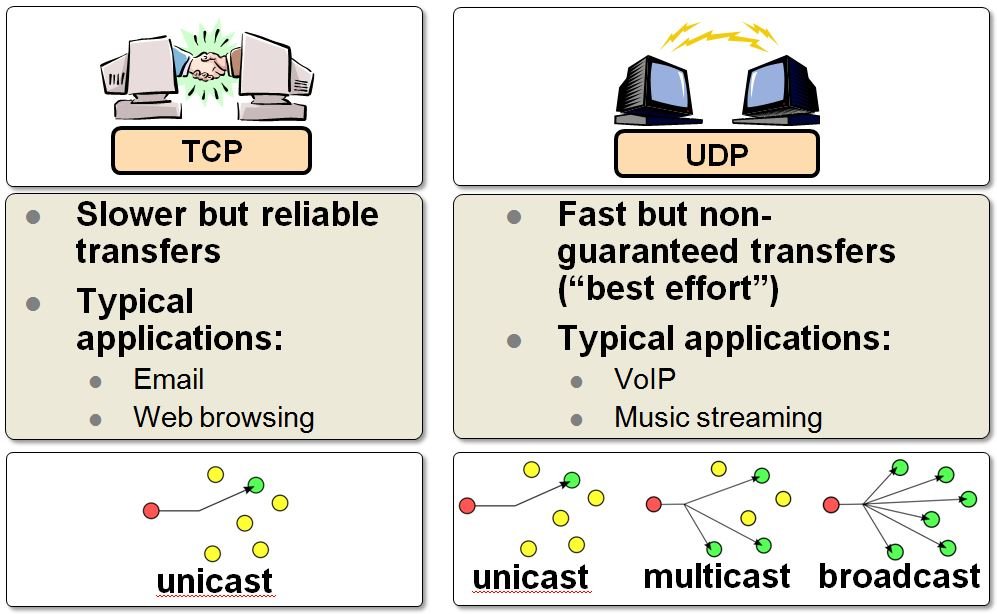
Transmission Control Protocol (TCP) is a connection-oriented, reliable communication protocol where the data can be transmitted both ways after a link has been established. TCP is ideal for transporting information like still photographs, data files, and web pages because it includes built-in mechanisms to check for faults and ensure data is sent in the order it was sent.
UDP - User Datagram Protocol is a connectionless and straightforward internet protocol where error-checking and recovery services are not considered. UDP is essentially used for establishing low-latency and loss-tolerating connections
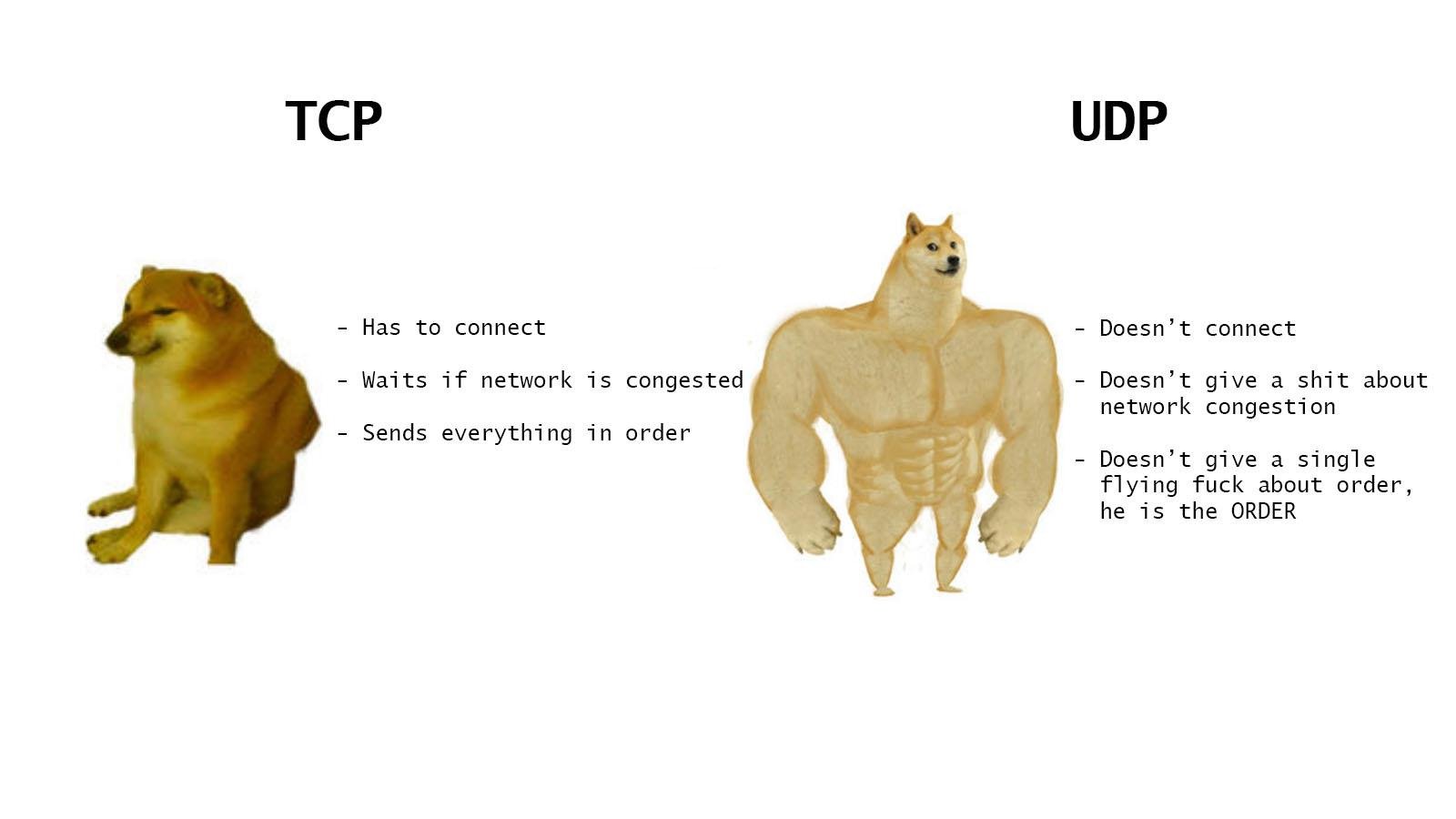
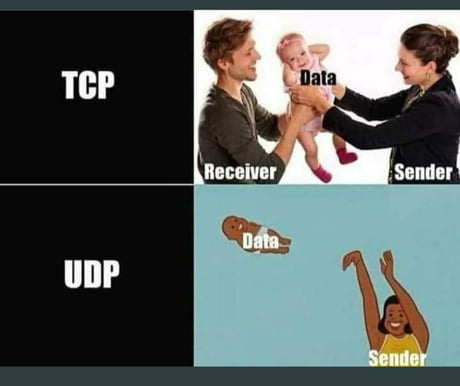
The critical difference between the protocols is that TCP is a connection-oriented protocol, whereas UDP is a connectionless protocol.
Here are the other vital differences between TCP and UDP, compiled by Manvi Tyagi - follow her on Twitter - https://twitter.com/ManviTyagi9.